Herding GLs – the Real Challenges CFOs Face
Most companies know they have an ERPi problem. In fact, it’s a multiple-ERP problem. So why aren’t they doing anything about it?
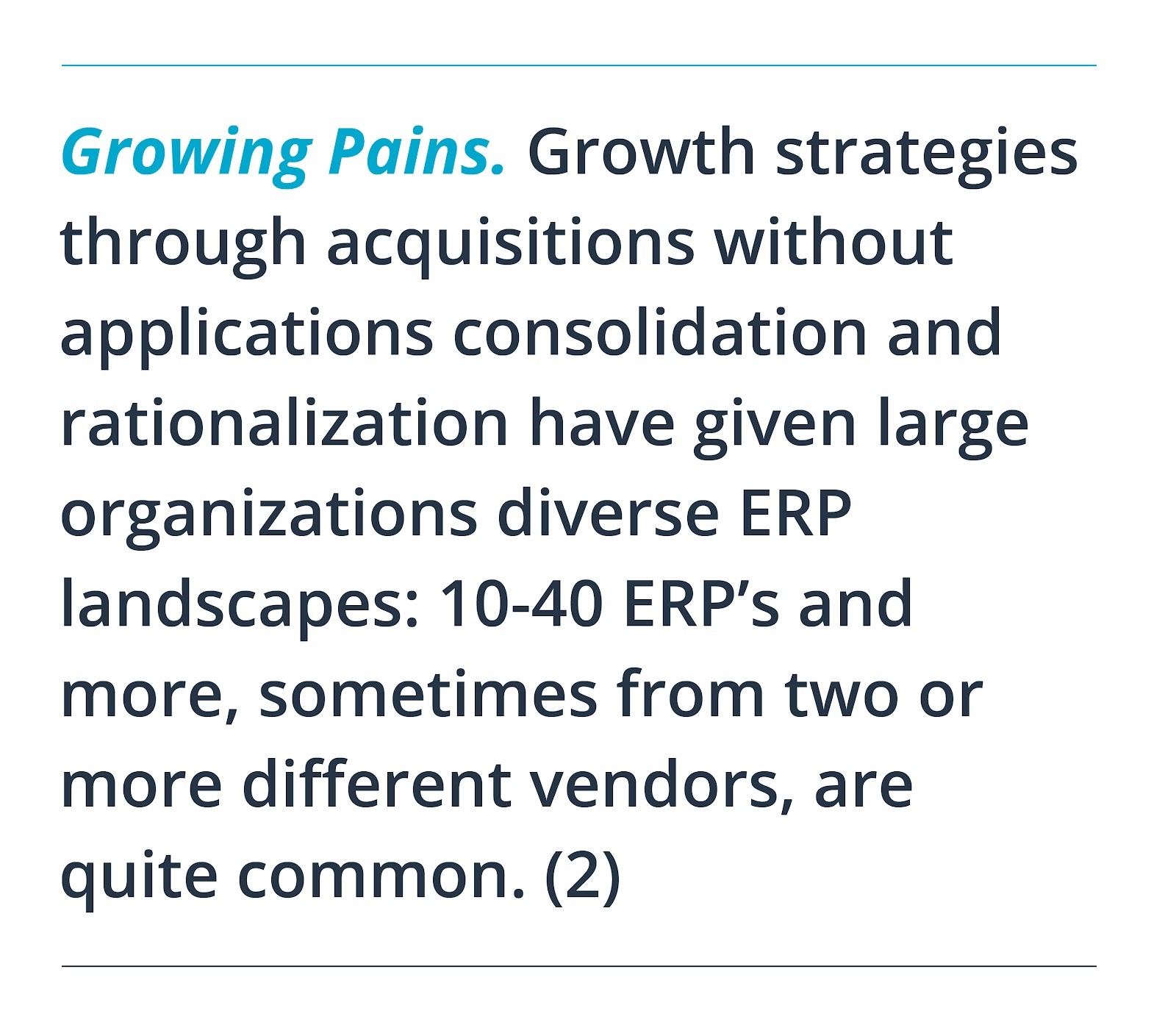
According to a 2018 study, 74% of companies have more than one ERPi which means 74% of CFOs and finance teams have more than one GL (general ledger) – and you are probably among them. What’s more, 14% of companies surveyed have more than ten ERPs! This is clearly something that should be top of mind for CFOs in every industry. However, many have been slow to act despite the fact that 75% of CFOs plan to increase capital spend for their finance teams in 2023ii which would seemingly encourage consolidation.
But the reason for foot-dragging is understandable: the prospect of consolidating multiple ERPs is daunting. It is a complex and consequential exercise that can be a years-long commitment. Yikes!
Welcome to the Multi(ERP)verse
So, what led to this situation? Organizations typically did not set out to operate multiple ERPs but have accumulated systems over time for a variety of reasons. One of the most obvious reasons is the impact of M&A activity over the last couple of decades. With global M&A deal volume growing more than 25%iii since 2010, a corresponding increase in the number of systems managed by an enterprise was often inevitable. As organizations came together, the systems of the combined enterprise fell under the same banner but were often not integrated in any meaningful way, and the disparate solutions persisted.
Perhaps less recognizable is the way multiple ERP systems crept into organizations organically. In the early days of ERP, this was mostly a symptom of how the systems were applied. Developed primarily to support manufacturing operations, and without the internet available to connect the plants, individual ERP systems were typically installed at each facility. A company with seven production facilities would naturally have seven separate ERP instances – and seven GLs that needed to be consolidated manually. Of course, most companies would not take that same approach today.
What now?
In recent years, tools have become available that allow CFOs to consolidate multiple GLs into one view. While the flexibility of these tools offers welcome relief in the short term, they are actually enablers of the same behaviors that brought us here in the first place: they allow companies to maintain their patchwork approach to consolidating GL data but do not provide a path forward to a long-term solution. This is a severe drawback.
Only recently have a new class of enterprise applications platforms emerged that enable CFOs to simultaneously consolidate multiple legacy GLs in one view and position the organization to move away from the old systems whenever they are ready. This approach provides a parallel runway that allows companies to consolidate their ERPs into a single, future-proof solution while also transitioning away from their legacy systems. By enabling this type of edge to enterprise adoption framework, organizations can wean themselves off cumbersome, version-locked ERPs at whatever pace they choose and in the way best suited to help them reach their strategic goals.
At Nextworld, we have developed the Enterprise-Grade Applications Platform that supports GL consolidation and provides the flexibility needed to pursue digital transformation initiatives today so you can stay ahead of what’s next®.
See how Nextworld can help you consolidate multiple GLs
i Aberdeen Research, March 2018
ii CFO 2023 Outlook, https://www.cfo.com/technology/automation/2023/02/75-of-cfos-to-increase-tech-spending-amid-automation-push/
iii https://www.statista.com/statistics/267368/number-of-mergers-and-acquisitions-worldwide-since-2005/
(1) Source:https://www.bloomberg.com
(2) Source: https://blogs.gartner.com/tonn...
Please share this:
About the Author

Nate Gilbert
Director - Solution Engineering
Nate is a CPA and brings over fifteen years of software industry experience to his role at Nextworld. He has firsthand knowledge of multiple ERP solutions, donor management, CRMs, and various reporting tools. His areas of expertise include budgeting, banking, fixed assets, AR, AP, general ledger, and intercompany & consolidations.

Herding GLs – the Real Challenges CFOs Face